

Nursing - Bachelor of Science
Overview
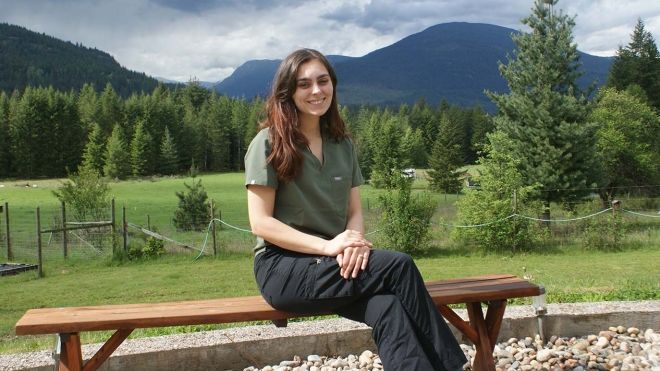
With all four years of classes held at Selkirk College, you will get to study in one of BC’s most beautiful regions and graduate with a University of Victoria Bachelor of Science in Nursing (BSN) degree.
Our location supports you to live in a community where the cost of living is lower than most urban centres. You will experience small class sizes, simulation technology, a variety of rural practice placements, and may have international learning opportunities.
Our program is nationally accredited by the Canadian Association of Schools of Nursing (CASN) and provincially recognized by the British Columbia College of Nurses and Midwives (BCCNM).
Nursing careers are diverse and include practice, education, administration and research.
After graduation, you will be prepared for entry level practice in a variety of settings and eligible for post-basic nursing specialty programs, including medical/surgical, critical care, gerontology, maternal child health, mental health, rural and remote, and community health.
Consider nursing if you are:
- Caring and compassionate
- A creative and critical thinker
- Professional in demeanor and behaviour
- Able to manage time, stress and uncertainty
- Committed to learning
- Comfortable with new technology
Graduates are eligible to write the National Council Licensure Examinations, Registered Nurse (NCLEX-RN) and qualified to pursue graduate education.


News

Program Outcomes
The following program outcomes are achieved by the interaction among students, clients, faculty, and practice partners in a process of lifelong learning. At completion of the curriculum, graduates of the Bachelor of Science in Nursing (BSN) program will be able to meet the six program outcomes:
1. Promote health and well-being by providing quality nursing care across a variety of contexts and with diverse populations.
2. Be accountable and ethical Registered Nurses who provide care and make decisions based on relationships with others, nursing knowledge and other forms of inquiry.
3. Demonstrate leadership that influences Registered Nursing practice and health care at professional, social, environmental, economic, and political levels by anticipating and responding to the changing needs of society.
4. Engage in intentional critical inquiry and self-reflection to facilitate life-long learning.
5. Contribute Registered Nursing knowledge and be a voice to interprofessional and team-based collaborations to optimize health outcomes and strengthen health services and systems.
6. Be shaped by understanding the historical and current social realities that result in Indigenous-specific racism, and which negatively impact Indigenous health and well-being. This curriculum is committed to enacting the principles of the Truth and Reconciliation Commission (TRC) and the United Nations Declaration on the Rights of Indigenous Peoples (UNDRIP).
Admission Requirements
BC high school graduation and completion of the following BC Provincial Curriculum courses (or equivalents) with minimum marks as indicated:
- English Studies 12 or equivalent (73%)
- Biology 12 (73%)
- One of three: Biology 11, Physics 12 or Chemistry 12 (60%)
- Chemistry 11 (67%)
- Foundations of Math 12 or Pre-Calculus 11 (67%)
Please note that you must be 18 years of age or older by the time the program starts, in order to meet regulatory requirements for in-program activities. Graduates are eligible to write the National Council Licensure Examinations, Registered Nurse (NCLEX-RN) and qualified to pursue graduate education.
Individuals applying for admission to the Bachelor of Science in Nursing Program must apply during the application period; exact dates are posted on the Nursing webpage. To be considered for the program, applicants must meet all prerequisites and submit their completed application and supporting documents by the end of the application period.
Before an application is considered complete, the following must be received by the Admissions Office:
- Selkirk College application form
- Official transcripts of high school grades (an interim statement of grades is acceptable if applicant is still attending school)
- Official transcripts for all post-secondary education studies in which the applicant has enrolled
- BC Ministry of Justice criminal record check
- Computer-based Assessment for Sampling Personal Characteristics (CASPer Test)
Applicants are responsible for registering for the CASPer Test. A limited number of testing dates and times are available. Results are sent directly to the College Admissions Office.
Admission to the BSN Program is through a selective admission process. Successful applicants are identified through the combined evaluation of GPA (based on program prerequisites) and a portfolio. The portfolio includes the CASPer screening tool designed to assess non-cognitive personal characteristics. Applicants will be ranked using a metric that incorporates academic and non-academic portfolio information.
Written offers will be sent to the highest ranked applicants. Receipt of a $500.00 non-refundable seat deposit by the offer-acceptance deadline is required otherwise the offer will be considered declined.
Once the seats have been filled, a waitlist will be created for the current intake. Applicants on the waitlist will be offered seats that remain or become vacant after the offer-acceptance deadline.
Applicants who are not accepted into the program will receive notification. Applicants who are not admitted or do not take a seat in a given year are required to reapply to be considered in a subsequent year; waitlists are not carried over.
Priority Registration:
a) Priority registration and reserved seating for qualified Indigenous applicants. Candidates are encouraged to self-identify their ancestry when applying for admission.
b) Priority registration and reserved seating for qualified High School applicants.
The number of seats reserved for either of the above groups of applicants will be determined by the school chair prior to opening applications for each cohort.
1. In order to progress from one semester to the next, the following requirements must be met:
Satisfactory completion of all nursing and non-nursing core courses with a minimum grade of 60% and a minimum cumulative GPA of 2.33 per semester.
The University of Victoria will convert the cumulative GPAs of Selkirk College students to the University of Victoria’s 9-point scale during the application process in semester five; failed required courses are included in the GPA.
Credentials: In order to qualify for graduation with a Bachelor of Science in Nursing (BSN), a student must meet the requirements as determined by the University of Victoria.
Courses
BIOL164 - Human Anatomy and Physiology I
BIOL 164 Human Anatomy and Physiology I. This course provides an integrative approach to the normal structure and function of the human body. Repair and replication, structural support, nervous integration, movement and metabolism are examined at the cellular, tissue and system levels. Recent scientific discoveries are presented as a means of relating the systems studied to various applied disciplines including health care and Kinesiology.
ENGL110 - College Composition
ENGL 110 introduces students to the world of scholarly writing -- reading it, thinking about it, and producing it as academic researchers. Students will explore how professional and/or academic writers across disciplines communicate to a variety of audiences. Students will practice active reading, writing and critical thinking skills by conducting scholarly research on a topic. This course aims to equip students with the skills and knowledge they need to write effectively within academic contexts.
NURS112 - Professional Practice I: Introduction to the Profession of Nursing
NURS 112 Professional Practice I: Introduction to the Profession of Nursing is a course where students will examine foundational perspectives and concepts of the curriculum and their relationship to the development of autonomous to nursing practice. Students explore the history of the profession of nursing and reflect upon the political, cultural, and socioeconomic forces that have influenced and are influencing the evolution of the nursing profession and contemporary nursing roles and responsibilities. Standards of nursing practice and responsibility for safe, competent, and ethical nursing practice are studied.
NURS116 - Health and Healing I: Introduction to the Context of Health and Health Promotion
NURS 116 Health and Healing I: Introduction to the Context of Health and Health Promotion introduces learners to health promotion. They will explore how health is conceptualized and examine their own personal beliefs relating to health. They will examine immerging impacts on health such as climate change. They will examine the health of diverse Canadians using a variety of health information sources in order to understand the individual and macro level conditions that impact health. Learners will examine the Canadian health care system, its effect on health status, and factors that contribute to health inequity, including gender, sexual orientation, and exigencies that impact Indigenous health, and the Social Determinants of Health. Learners will be introduced to the concept of primary health care and explore the contributions of professional nursing to the health of individuals, families, and communities, across the lifespan.
NURS117 - Relational Practice I: Self and Others
NURS 117 Relational Practice I: Self and Others. Students are introduced to nursing as an experience lived between people and explore the multiple factors that influence their own capacity to be in caring relation to others (individual, family groups, populations, communities, and the environment). They learn to question personal perspectives of experience to uncover attitudes, beliefs, and values and to share and acknowledge differences. Students are introduced to principles of self-care, professional responsibilities, relational competence and relational inquiry, and reflexivity, drawing on curriculum foundational perspectives to explicate meaning.
*BIOL 164 meets the requirement for Health Sciences I in the block transfer to University of Victoria.
BIOL165 - Human Anatomy and Physiology II
BIOL 165 Human Anatomy and Physiology II is a continuation of Biology 164. This course covers the cardiovascular, respiratory, lymphatic, urinary and digestive systems. Endocrinology is discussed throughout as a means of integrating the various systems to the function of the body as a whole. The focus remains on application of knowledge gained in this course.
NURS122 - Professional Practice II: Discipline of Nursing: Knowledge Development and Inquiry
NURS 122 Professional Practice II: Discipline of Nursing: Knowledge Development and Inquiry, in this course, students examine the discipline of nursing and the relationship between nursing practice, theory, and research. Students explore contemporary understandings of the discipline of nursing and the body of knowledge that defines it by approaching knowledge for nursing as an intersection of relationship and inquiry, research, and evidence-informed practice. Students are introduced to nursing theorists, the nursing metaparadigm, and nurse’s ways of knowing, including the essentials of informatics, and its role in guiding practice. Students develop skill in accessing, reviewing, and appraising evidence promoting community and societal health.
NURS126 - Health and Healing II: Health Assessment Across the Lifespan
NURS 126 Health and Healing II: Health Assessment Across the Lifespan. In this course learners will explore promoting health and wellbeing of individuals and families across the lifespan. The focus is on health promotion, teaching and learning, and human growth and development; and how these foci inform the registered nurse’s role in contemporary health care. Learners will integrate and apply theoretical and conceptual frameworks in relation to developmental stages throughout the lifespan. Learners will integrate the Social Determinants of Health into strategies to promote health across the lifespan. Learners will expand knowledge of learning theory as it applies to individuals, families, and groups.
NURS129 - Nursing Practice I: Introduction to Nursing Practice and Coming to Know the Client
NURS 129 Nursing Practice I: Introduction to Nursing Practice and Coming to Know the Client, in this course students apply knowledge from previous and concurrent courses to their beginning understanding of nursing practice. This introductory practice experience provides opportunities to develop caring relationships with groups, families and individuals across the lifespan. Emphasis is placed on health assessment and coming to know how individuals understand and promote their health, and the role of the nurse in partnering with the person in this process. Students work with interprofessional teams in the home and community, in agencies, and care settings as they begin to develop their professional identity and use critical reflection, the decision-making model, and professional standards to support safe nursing practice. Students are introduced to the systems which support delivery of health care, such as organizational structures, occupational health and safety, information and communication technologies, and agency policies.
NURS130 - Consolidated Practice Experience I
NURS 130 Consolidated Practice Experience I is designed to assist students to move forward with the health promoting focus of year one towards the focus on health challenges in year two. Students have opportunities to develop caring relationships with individuals and families, furthering the development of their assessment skills, some medication administration skills, and their understanding of health and health promotion. Students build confidence in all domains of nursing practice as they integrate knowledge from health and healing, applied health sciences, relational practice and professional practice courses.
INDG302 - Indigenous Health And Healing
INDG 302 Indigenous Health and Healing introduces students to the topic of Aboriginal health and healing from the time prior to first contact with European newcomers through to the present. We will also focus on cultural awareness and critical thinking on current Aboriginal health and healing issues. Aboriginal health and healing will be explored from within a variety of Aboriginal perspectives that are inclusive of the physical, mental, emotional and spiritual aspects of health and well-being. Skill-based training in cultural safety and anti-racism based on the recommendations and information provided by the Truth and Reconciliation Commission results and the 'calls to action' will be emphasized. Aboriginal worldviews and 'ways of knowing' will be embedded in the course delivery as well as course content.
AHSC218 - Health Sciences III: Applied Health Sciences I
AHSC 218 Health Sciences III: Applied Health Sciences I introduces foundational knowledge of concepts related to human pathophysiology, microbiology, immunology, epigenetics, diagnostics, nutrition and pharmacology. Students will also use foundational knowledge from anatomy and physiology to analyze how these concepts can alter the homeodynamic state of the body and how they affect specific diseases within the cardiovascular, endocrine, lymphatic, and nervous systems. Prototype diseases and prototype drugs are examined, with an emphasis on integrating scientific processes with nursing practice. Students gain an appreciation for the individual differences in hemodynamic and presentation of health challenges in the client, across the lifespan. While the course will cover diagnosis and medical management of diseases studied, protocols related to nursing care and nursing management will be covered in nursing courses.
NURS216 - Health & Healing III: Health Challenges/Healing Initiatives
NURS 216 Health & Healing III: Health Challenges/Healing Initiatives explores foundational concepts informing nursing practice to provide safe, inclusive, competent, anti-oppressive care in the context of complex illness across the lifespan. Students integrate knowledge of nursing science as it relates to caring for persons who live with complex illness. Learners develop skills in critical thinking, the Decision-Making model, and teaching and learning theory. Students employ principles of health promotion, management of complex illness, rehabilitation, and supportive care when crafting patient-centered care plans. Students integrate knowledge from pathophysiology and pharmacology to shape nursing care.
NURS219 - Nursing Practice II: Promoting Health & Healing I
NURS 219 Nursing Practice II: Promoting Health & Healing I provides opportunities for learners to develop caring relationships with individuals and families for the purpose of health promotion while coming to understand their health and healing processes when experiencing more complex health challenges. Learners will have opportunities to practice nursing approaches that accompany this understanding. Learners work with families and individuals in a variety of settings to incorporate nursing knowledge from current and previous courses into their nursing practice. The community and society are considered as contextual influences on the promotion of health for the individual and the family.
NURS222 - Professional Practice III: Nursing Ethics
NURS 222 Professional Practice III: Nursing Ethics builds on previous Relational Practice and Professional Practice courses, focusing on the growing body of knowledge related to nursing ethics. Beginning with an understanding of bio-medical ethics that have dominated nursing ethics in the past and moving to an understanding of developing ethical theory related to nursing and nursing issues, participants will have opportunities to explore nursing ethics in the context of their nursing practice.
AHSC228 - Health Sciences IV: Applied Health Sciences II
AHSC 228 Health Sciences IV Health Sciences II continues the study of concepts related to human pathophysiology, microbiology, immunology, epigenetics, diagnostics, nutrition and pharmacology. Students will also use foundational knowledge from anatomy and physiology to analyze how these concepts can alter the homeodynamic state of the body and how they affect specific diseases within the respiratory, digestive, urinary, and reproductive systems. Prototype diseases and prototype drugs are examined, with an emphasis on integrating scientific processes with nursing practice. Students gain an appreciation for the individual differences in hemodynamic and presentation of health challenges in the client, across the lifespan. While the course will cover diagnosis and medical management of diseases studied, protocols related to nursing care and management will be covered in health and healing courses.
NURS226 - Health and Healing IV: Health Challenges/Healing Initiatives
NURS 226 Health and Healing IV: Health Challenges/Healing Initiatives continues to provide safe, competent, culturally appropriate care, and begin to synthesize nursing and interdisciplinary knowledge into nursing care in the context of selected complex illnesses across the lifespan. Learners will integrate foundational knowledge from pathophysiology, pharmacology, and nursing into their clinical reasoning skills in order to plan care that is patient-centred, evidence-informed, and culturally competent care for persons across the lifespan. Learners examine nursing practice and health care environments by examining meanings associated with vulnerability, ethics and informed consent, health promotion, and Indigenous ways of knowing and being.
NURS229 - Nursing Practice III: Promoting Health and Healing
NURS 229 Nursing Practice III: Promoting Health and Healing continues to provide opportunities for learners to develop caring relationships with individuals and families for the purpose of health promotion, while coming to understand their health and healing processes when experiencing more complex health challenges, both episodic and chronic. Students will have opportunities to practice nursing approaches that accompany this understanding. Students work with families and individuals in the home and community, in agencies, and in care facilities to incorporate concepts and learning from all semester's courses into their nursing practice. The community and society are considered as contextual influences on the promotion of health for the individual and family.
NURS230 - Consolidated Practice Experience II
NURS 230 Consolidated Practice Experience II n this consolidated practice experience, opportunities are provided to develop caring relationships for the purpose of healing and health promotion with individuals and families experiencing increasingly complex health challenges. The community and society are considered as contextual influences on the promotion of health for the individual and the family. Learners have opportunities to consolidate learning from the first and second year of the program in a variety of settings, including maternal child settings, pediatric settings, and mental health settings.
NURS260 - Professional Practice IV: Nursing Research
NURS 260 Professional Practice IV: Nursing Research enhances students’ understanding of research as part of nursing scholarship. Students will develop their abilities to comprehend, critique, and apply nursing and
interdisciplinary research to their practice. Students reflect on various types, methods, and sources of research that inform nursing theory and practice. Students critically examine their practice in relation to research and pose research questions for evidence-informed practice.
NURS316 - Health and Healing V: Complex Health Challenges
NURS 316 Health and Healing V: Complex Health Challenges builds on Health and Healing I and II and Health Sciences III and IV and provides opportunities for participants to build on their nursing knowledge and understanding of health and healing in relation to complex episodic and chronic health challenges. This advanced course will focus on current topics and emerging knowledge related to a variety of health care contexts.
NURS317 - Relational Practice III: Connecting Across Differences
NURS 317 Relational Practice III: Connecting Across Differences builds on the concepts introduced in Relational Practice I and II and other previous courses, Relational Practice III provides a synthesis of knowledge that is the basis of critical relational analysis. This course focuses on enhancing participants' everyday relational practice with individuals, families, and groups. The emphasis is on engaging with the complexities of difference in everyday nursing practice and the challenges these complexities might pose for being in-relation with clients.
NURS319 - Nursing Practice V: Promoting Health and Healing
NURS 319 Nursing Practice V: Promoting Health and Healing. This nursing practice experience continues to provide opportunities for learners to develop caring relationships with individuals and families, while coming to understand their health and healing process within the context of complex health issues. Participants will have opportunities to practice nursing approaches that accompany this understanding. Participants work with families and individuals in the home and community, in agencies, and in care facilities to incorporate concepts and learning from all the courses in the semester into their nursing practice, with an emphasis on the complex health challenges.
one (1) 100-400 level General Elective course
See the UAS Courses by discipline page for course selections.
NURS341 - Professional Practice IV: Nursing Inquiry
NURS 341 Professional Practice IV: Nursing Inquiry builds upon concepts introduced in Professional Practice I, II, and III, in this course, participants will explore the historical and philosophical approaches to the development of nursing knowledge and inquiry. Relationships between practice, theory, and research are explored.
NURS342 - Health Healing VI: Global Health Issues
NURS 342 Health Healing VI: Global Health Issues. Participants in this course continue to develop an understanding of people's experience with health and healing related to a variety of increasingly complex chronic and episodic global health challenges and issues. Emphasis is placed on the role of the nurse as care provider, community organizer/facilitator, educator and advocate within the context of the global society and the changing health care environment. Participants examine a variety of emerging health issues and trends using these as a context for further developing their personal understanding of nursing practice that supports meaningful interactions with individuals, families, groups, communities and society.
NURS350 - Health and Healing VII: Promoting Community and Societal Health
NURS 350 Health and Healing VII: Promoting Community and Societal Health focuses on the role of the nurse in the promotion of community and societal health. It is a companion course with Health and Healing VI and participants will continue to develop their competencies in relational practice with a focus on community and society as client. The political role of the nurse is explored as the emphasis is placed upon working with communities from a social justice and equity perspective. Community development and capacity building as a pattern of community health promotion practice, is explored. In addition students will further develop their understanding of teaching and learning focusing on transformative and emancipatory approaches.
NURS351 - Nursing Practice VI: Promoting Health of Communities and Society
NURS 351 Nursing Practice VI: Promoting Health of Communities and Society practice experience provides opportunities to develop caring relationships with families, groups, and communities and/or populations with emphasis on health promotion and community empowerment. Participants have opportunities to work with a community on an identified health issue.
NURS370 - Consolidated Practice Experience (CPE) III & IV
NURS 370 and 470 Consolidated Practice Experiences (CPE) III & IV are designed to provide opportunities for participants to integrate, consolidate and expand concepts from previous learning. Participants have opportunities to consolidate learning from the first, second and third years of the program in a variety of settings and with any of age or type of client.
NURS470 - Consolidated Practice Experience (CPE) III & IV
NURS 370 and 470 Consolidated Practice Experiences (CPE) III & IV are designed to provide opportunities for participants to integrate, consolidate and expand concepts from previous learning. Participants have opportunities to consolidate learning from the first, second and third years of the program in a variety of settings and with any of age or type of client.
one (1) 100- 400 level General Elective course
See the UAS Courses by discipline page for course selections.
NURS430 - Professional Practice V: Leadership in Nursing
NURS 430 Professional Practice V: Leadership in Nursing explores the ways nurses can provide leadership, influence, create and manage change for the promotion of health for individuals, families, groups and communities within the context of society and the world. Emphasis is placed on leadership roles of the nurse within practice contexts. The role of the nurse within the current and evolving Canadian health care system is explored including considerations of the impact of global trends and issues. Issues facing nurses in the current work environment will be discussed. Collaborative and ethical approaches for working within institutional philosophies and frameworks will be explored.
NURS431 - Nursing Practice VII: Engaging in Leadership
NURS 431 Nursing Practice VII: Engaging in Leadership. This nursing practice experience provides opportunities for participants to further develop their competencies in the areas of leadership, influencing and managing change, and the utilization of research for the purpose of promoting the health of individuals, families, communities and society, within the context of the Canadian health care system. This nursing practice experience focuses on participants' growth in their practice as professional nurses. They have opportunities to explore inter-professional practice and nursing leadership in the context of emerging Canadian and global health issues and trends.
NURS360 - Professional Practice VI: Nursing Research
NURS 360 Professional Practice VI: Nursing Research builds on Professional Practice II, III, and IV, the intent of this course is to enhance participants' understanding of nursing scholarship and enhance their abilities to comprehend, critique, and utilize nursing research. Participants critically reflect on various scholarly works and research methodologies. Participants experience ways to critically examine their practice in relation to nursing research and to pose research questions for evidence-informed practice.
one (1) 300 or 400 level Nursing course
NURS475 - Consolidated Practice Experience V
NURS 475 Consolidated Practice Experience V is designed to provide opportunities for participants to integrate learning from previous semesters, and to advance their professional nursing practice and assume the role of a BSN graduate. In a variety of settings, students have opportunities to consolidate learning and advance their decision-making for nursing practice skills.
NURS491 - Nursing Practice VIII
NURS 491 Nursing Practice VIII provides opportunities for participants to consolidate their learning and explore the transition to professional nursing as a BSN graduate. Participants also explore transitions in the health care system and the workplace that affect nurses. Participants develop their practice and enhance their knowledge within a specific area, for example, a particular setting of practice, a certain client population, or a specific health challenge.
Tuition & Fees
All amounts are estimates and are subject to change. Tuition amounts are based on a full-time course load. Please note that many programs have additional costs beyond those listed here. For more information, please visit Tuition & Fees.
Find Out More
We look forward to connecting with you! Fill out this form and we'll reach out to you.